Bedding · Natural fibres · A practical guide
Organic Wool Bedding: How Sleep and Beyond Uses Natural Fibres
Wool’s appeal is more than its quiet warmth. Its ability to absorb moisture, its springy structure and the way it works with a breathable cotton shell all contribute to the distinctive feel of wool bedding. Sleep and Beyond’s wool-filled comforters offer a useful case study in how natural fibres, construction and care come together in a bed layer designed for comfort.
Published 15 November 2026
There is a particular pleasure in bedding that feels reassuring without becoming cumbersome: a layer that warms the bed, yet does not leave it feeling sealed off from the air. Wool has long occupied this middle ground. It can provide insulation while also absorbing moisture, and its character differs markedly from the light, buoyant feel of down or the familiar softness of synthetic fill. For anyone considering organic wool bedding, the finer details matter: the wool itself, the shell fabric, the stitching, the intended weight and, just as importantly, the care instructions.
Sleep and Beyond’s wool bedding helps illustrate these choices. Its myComforter, for example, is described as having 100% washable wool fill within a 100% natural cotton sateen shell. The range also includes lighter-weight versions, including the myComforter Light, and a lighter merino option designed for warmer conditions. These details are a starting point rather than a promise that one filling will suit every sleeper. Comfort depends on the room, the bedding layers, personal warmth preferences and how a comforter is maintained.
Why wool feels different
Wool fibres have a naturally crimped structure, which helps create small pockets of air within a filling. Air trapped in and around the fibres contributes to insulation, while the fibres themselves can absorb moisture vapour. This combination helps explain why wool bedding is often described as breathable and temperature regulating. In everyday terms, it can offer warmth without the same dense, sealed sensation some sleepers experience under heavier or less breathable layers.
That does not mean wool actively controls body temperature, or that it guarantees a cool night. A comforter’s performance is influenced by its fill weight, the density of the quilting, the shell fabric, the duvet cover used over it and the temperature of the room. Someone who sleeps warm in a well-heated bedroom may prefer a light version; a colder room or a sleeper who feels chilly may call for more insulation. The best measure is the whole sleep setup, not the fibre name alone.
Wool can also take up moisture before it feels damp to the touch. This moisture management is one reason natural wool fillings are valued by people who dislike a clammy or overly warm sleep environment. The shell remains important: a cotton sateen cover, as used on the myComforter, gives the filling a smooth, close-woven casing. A removable duvet cover adds another layer between the comforter and daily soil, while allowing the outer bedding to be washed more regularly.
The Sleep and Beyond approach: fill, shell and quilting
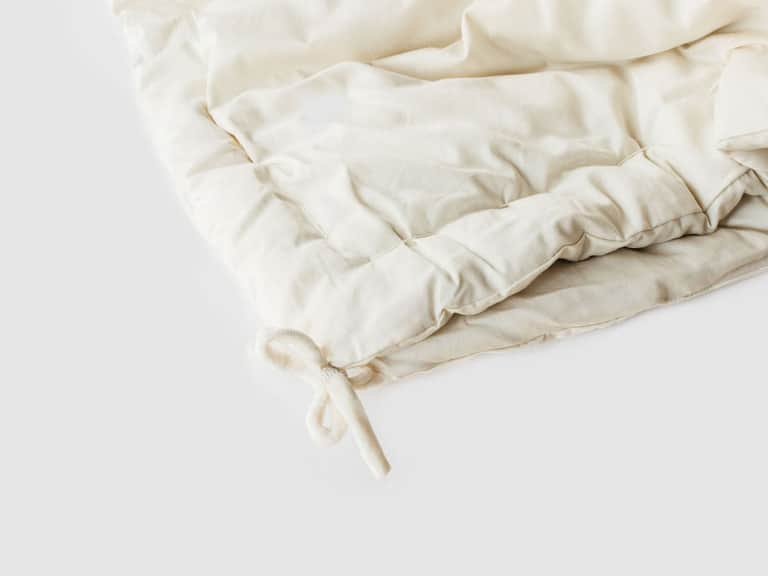
A comforter is not simply its filling. It is a small system made from the fibres inside, the textile around them and the construction that keeps everything in place. In Sleep and Beyond’s myComforter, the wool filling is paired with a cotton sateen shell. This pairing brings together the insulating, moisture-absorbing qualities associated with wool and a cotton fabric that feels smooth against the skin. A duvet cover can protect both materials while also changing the surface feel and appearance of the bed.
Quilting is another practical detail. If filling shifts, one part of a comforter may feel flatter while another gathers into a lump. Sewn or quilted sections help keep batting distributed across the surface. Sleep and Beyond describes its comforter quilting as designed to prevent wool from shifting within the pockets. When assessing any wool comforter, look for a clear description of its construction: the pattern of stitching, the way the filling is secured and whether the edges are finished to withstand regular use.
Weight also shapes the experience. The standard myComforter is described as having 13 ounces of wool fill per square yard; the lighter option uses 5 ounces per square yard, while the lightweight merino version is described at 6 ounces per square yard. Those figures can help compare options within a range, but they are not a universal warmth scale. Fill weight, dimensions, construction and the sleeper’s own preferences all affect how warm a comforter feels.
For a closer look at the product’s stated materials and care, see the Sleep and Beyond myComforter details. Product specifications can change, so check the current label or manufacturer guidance before purchasing or laundering.
What “organic” certification can tell you
The word organic is most useful when it is attached to a specific, verifiable claim. A certification may cover a fibre, a textile-processing stage or a finished product, and these are not necessarily the same thing. For example, a certificate relating to organic wool does not automatically establish that every component, including the shell, thread, dye or finishing treatment, is certified organic.
Sleep and Beyond’s product information describes its wool as certified organic and identifies certifications including GOTS and OEKO-TEX for particular items or materials. Before relying on a certification claim, read the product’s current documentation carefully. Check which component the certification applies to, whether the certificate is current, and whether the certification body or standard is named. For GOTS, the scope and certification status matter; it is more informative to know precisely what has been certified than to rely on a broad phrase alone.
Certification is not a guarantee of a particular feel, durability or suitability for an individual. Nor does the word “natural” itself mean a material has been certified organic. Certifications can provide useful information about standards and production requirements, but they do not replace practical questions about warmth, construction, fit and cleaning. A well-informed choice combines documentation with an honest assessment of how the bedding will be used.
Wool compared with down, silk and synthetic fill
Different fillings create different kinds of comfort. Down is prized for loft and lightness: clusters trap air and can produce a lofty layer that feels soft and enveloping. Its warmth depends on factors such as fill power, fill quantity and construction. A down comforter may feel less weighty than a wool-filled one at a similar level of warmth, though comparisons between products are meaningful only when their specifications are understood.
Silk filling tends to have a flatter, drapier profile than highly lofty down. It is often chosen by sleepers seeking a light layer and a smooth, gentle feel. Its care requirements vary by product, and some silk comforters should not be machine washed. A removable cover and careful attention to the label are especially valuable when the filling is delicate.
Synthetic fills can be practical for people who want a familiar, often easier-care option, although care instructions still depend on the product. “Down alternative” covers a wide range of constructions, from fine fibres to engineered chambers. Wool, meanwhile, has a distinctive balance of insulation, moisture absorption and natural fibre resilience. There is no universal winner: the useful question is which combination of warmth, weight, maintenance and material preference best suits the sleeper.
Choosing a weight for the room you actually sleep in
It is tempting to choose bedding according to the season alone. In practice, bedroom temperature, heating habits, the number of layers on the bed and individual sleep patterns may matter just as much. A light comforter can be a sensible choice for a warm room, a person who tends to overheat or a bed already layered with blankets. A more substantial wool comforter may be appealing where nights are cold, heating is limited or the sleeper prefers a cocooning feel.
Think of warmth as a system rather than a single specification. A breathable duvet cover, a light blanket that can be removed easily and a comforter suited to the bedroom’s usual temperature may provide more flexibility than relying on one very heavy layer. If two people sharing a bed have different warmth preferences, separate covers or layers on each side can be simpler than expecting one comforter to satisfy both.
- For warmer sleepers: consider a lighter fill, fewer layers and a breathable cotton cover.
- For cooler rooms: look at a heavier fill or a system that allows an additional layer in colder weather.
- For changing seasons: choose layers that can be added or removed without making the bed difficult to manage.
- For shared beds: discuss different warmth needs before selecting one uniform weight.
Care is part of the material choice
Wool bedding should not be treated as if every item were machine washable. Product guidance differs according to the wool preparation, quilting, shell fabric and construction. Sleep and Beyond recommends protecting its comforters with a removable duvet cover, which helps reduce direct contact with skin oils and everyday soil. Regular airing is also recommended to refresh wool bedding without subjecting it to frequent washing.
For routine marks, the brand’s guidance for its myComforter suggests spot-cleaning the cotton cover with a soft brush and mild detergent, then allowing it to dry completely. Its instructions caution against frequent washing because the batting may separate within the quilted pockets. The product information describes machine washing on a cool or warm wool or delicate cycle without agitation, using a suitable wool detergent, with no spin; it also advises air drying or low tumble drying. For substantial stains, it recommends professional cleaning with limited moisture. Always follow the current care label for the specific item: instructions for one wool comforter should not be assumed to apply to another.
Drying deserves particular attention. Even when the outside feels dry, moisture may remain within the filling. Do not store a comforter until it is fully dry, and avoid compressing it in a damp condition. When airing outdoors, protect it from dirt and unexpected weather. Gentle handling, a well-fitting cover and adequate drying can help preserve the comforter’s shape and reduce the need for intensive cleaning.
A considered checklist before choosing
Before choosing organic wool bedding, take a moment to look beyond the headline material. The following checklist helps turn broad claims into practical questions:
- What is the filling made from, and is the wool weight or density stated?
- What is the shell fabric, and does the description identify its fibre composition and weave?
- How is the filling held in place: quilting, stitching, tufting or another construction?
- What does any organic certification apply to—the wool, the shell, processing or finished item?
- Can a duvet cover be attached securely, and are corner ties or loops included?
- Does the care label permit machine washing, or is spot cleaning or professional care required?
- Will the comforter’s weight work with the room temperature and other bedding layers?
A quieter kind of comfort
Natural-fibre bedding is appealing not because one material can solve every sleep concern, but because its details can be chosen with intention. Wool offers a particular combination of warmth, moisture absorption and resilience; cotton contributes a familiar, breathable shell; and thoughtful quilting helps keep the filling evenly distributed. Sleep and Beyond’s wool-filled range makes those relationships visible, from its cotton sateen casing to its varied weights and specific care recommendations.
The most comfortable bedding is ultimately the bedding that suits its owner’s habits. Check what is certified, understand what the construction means, choose a weight for the bedroom rather than for the calendar alone, and treat the care label as part of the purchase. With those considerations in view, organic wool bedding becomes less a claim and more a practical, tactile choice for shaping a restful bed.
Frequently asked questions
Does wool bedding feel hot?
Not necessarily. Wool can insulate while absorbing moisture, but the warmth of a particular comforter depends on its fill weight, construction, cover and room conditions. A lighter option may suit warm sleepers better than a heavier one.
Is organic wool automatically hypoallergenic?
No material can be assumed suitable for everyone. Certification describes defined production or processing standards; it does not guarantee an individual response. People with specific sensitivities should review the full material details and seek appropriate professional advice where needed.
Can a wool comforter go in the washing machine?
Only if the manufacturer’s care instructions permit it. Wool products vary, and agitation, high heat or incomplete drying may damage the filling or construction. Use the care label for the exact comforter rather than applying general wool-care advice.
What is the benefit of using a duvet cover?
A removable cover helps shield a comforter from everyday soil and body oils, and it is usually easier to launder than the comforter itself. It can also change the bedding’s surface feel and appearance without changing the filling.